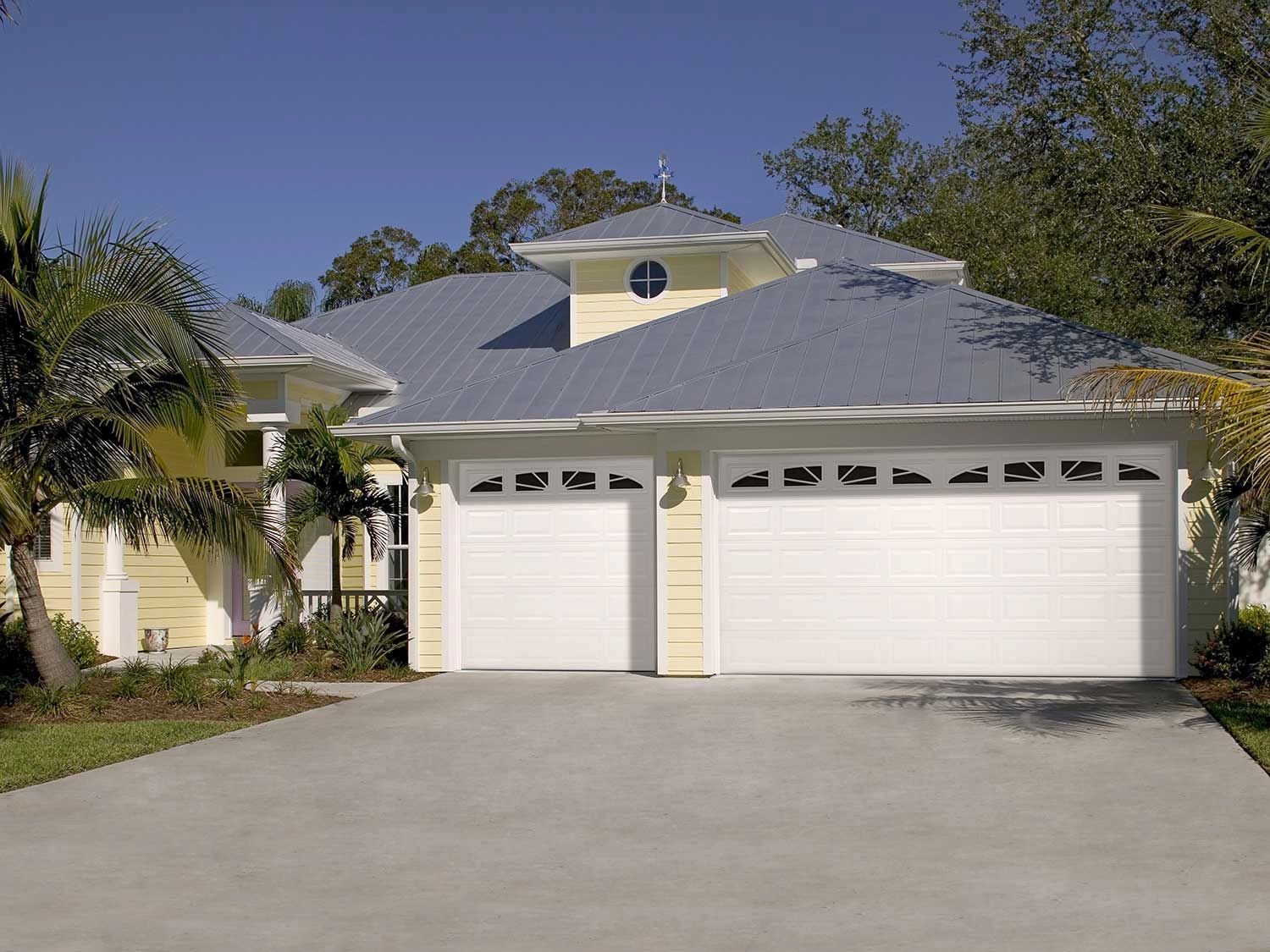
Your garage deals with a lot in Southwest Florida. There is heavy summer rain, wind-driven storms, strong sun, thick humidity and a steady stream of bugs looking for a cool place to hide.
Weatherproofing is how you fight back. The goal is simple: keep water out, keep heat down, keep pests out and keep humidity from settling in. Here is where to start.
Start with the biggest opening
Your garage door is the largest opening in the garage, so it is usually the biggest leak. Gaps along the bottom, sides and top let in rain, dust, heat and insects.
Look for daylight around the closed door, cracked or flattened rubber, and water on the floor after a storm. Worn seals are an easy fix compared to the trouble they cause. We cover the different types in our guide to garage door weatherstripping and threshold seals.
Seal gaps and cracks
Next, walk the garage and look for other places air and water can sneak in.
- Caulk. Use a flexible, exterior-grade caulk around windows, side doors, vents and small cracks. Clean and dry the surface first so it sticks.
- Concrete repair. Cracks in the floor or walls can be filled with a concrete repair compound or epoxy filler. That keeps moisture from working in and the crack from getting worse.
- Expanding foam. For larger gaps, such as around pipes or wiring that pass through a wall, expanding foam sealant fills the space.
- Weatherstripping. Put it around side doors and windows, too, not only the garage door.
Add insulation where it counts
An insulated garage stays more comfortable and eases the load on your air conditioner. That matters most when the garage shares a wall or ceiling with living space.
Common choices include:
- Fiberglass batts for walls and ceilings
- Rigid foam boards for walls
- Spray foam for a seamless, airtight layer that fills small gaps
- Radiant barrier to reflect heat, which helps in a hot climate
Follow the manufacturer's instructions and your local building rules. In our humid climate, keep insulation dry. Wet insulation stops working and can grow mold, so fix leaks first.
The door counts, too. A door with an insulated core slows heat much better than a single layer of steel. Read more in the benefits of an insulated garage door.
Manage drainage and airflow
Water that sits against the garage causes trouble. Check that the ground slopes away from the slab and that floor drains and driveway channels are clear of leaves and debris.
Good airflow also helps. A garage that never gets air tends to hold humidity, which leads to musty smells and mildew on stored items. A vent, a fan or a dehumidifier can help, depending on your space.
Keep up with it all year
Weatherproofing is not one and done. Seals wear, caulk cracks and insulation shifts. A quick check at the start of each season, and again before hurricane season and after a big storm, keeps small problems small.
Here is a simple checklist:
- Look at the door seals. Replace any that are cracked, flattened or peeling.
- Check the caulk. Redo any that has split or pulled away.
- Inspect the insulation. Look for moisture, sagging or damage.
- Clear the drains and the area around the garage.
- Clean and lubricate the rollers and hinges. Wipe off dirt first, then use a garage-door-rated silicone or lithium lubricant.
- Look over the door. Watch for rust, loose hardware, and anything that rubs or sticks.
Leave the springs, cables and the brackets at the bottom corners of the door alone. They are under tension and can cause serious injury. If something looks worn or frayed, call a professional.
Get a professional set of eyes
Even when everything looks fine, a yearly garage door inspection can catch problems you cannot see. We check the seals, the hardware and how the door runs, and we will tell you straight if something needs attention. If your door is old, worn or does not seal well anymore, a new door may do more good than patching. Take a look at our new residential garage doors.
Keep the weather out of your garage
Overdoors of Florida is family-owned and has served Southwest Florida since 1983. We are 5-star rated on Google. Call or text (239) 643-7612, or request a free quote. We give you up-front pricing before any work begins.
Call or text (239) 643-7612, or request a free quote.