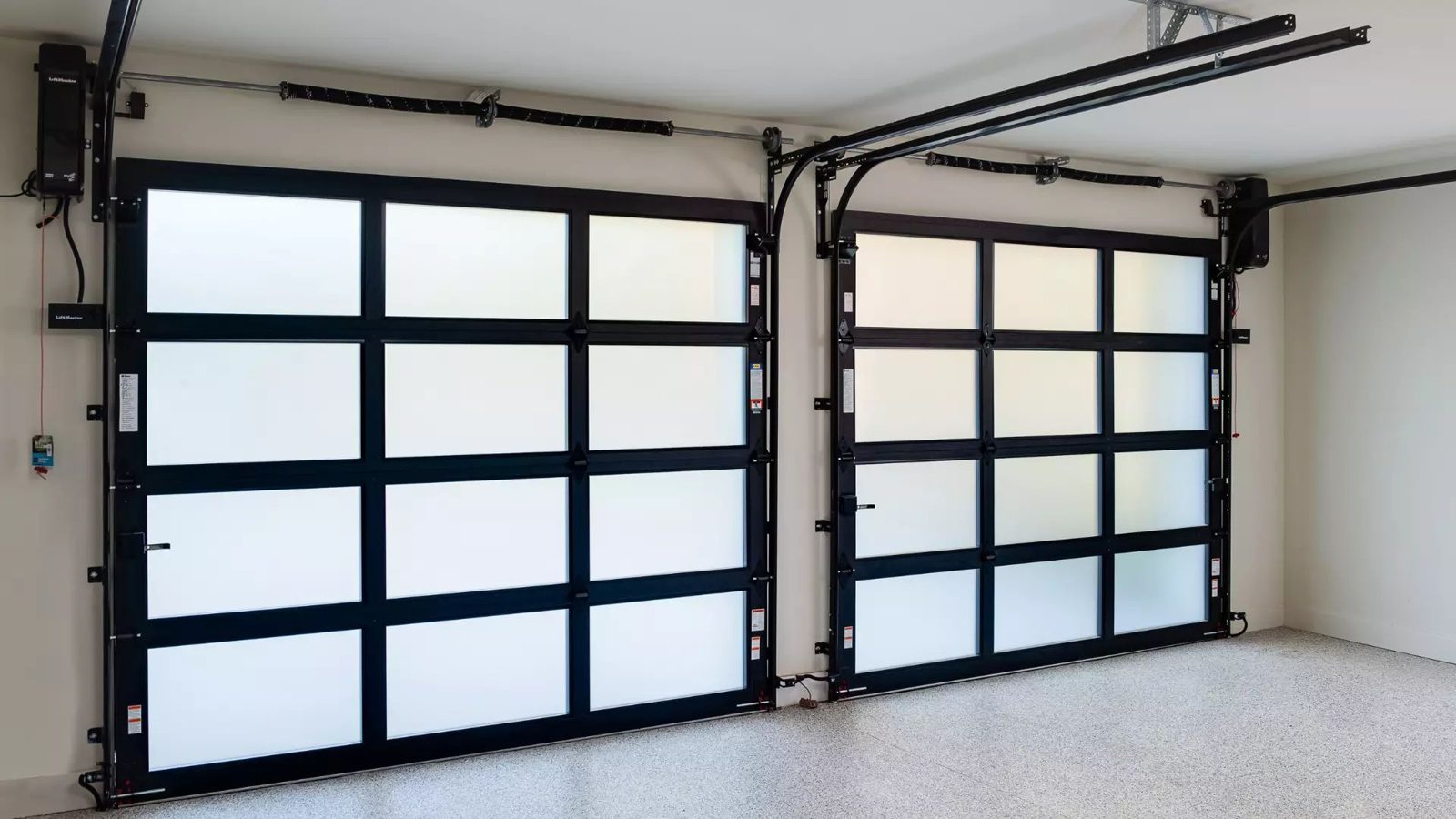
Your garage door is probably the largest moving part in your house. It weighs a lot, it moves every day, and your kids and pets walk right past it. Most of the time it just works. But a few smart habits, plus a quick check once a month, keep it that way.
Here is what we tell our own neighbors in Naples: what to look at, what to test, and what to leave to a professional.
Do a quick look-and-listen once a month
Stand inside the garage and run the door a few times. You are not fixing anything here. You are just paying attention.
- Does it move smoothly, or does it shake, jerk or slow down?
- Does one side sit higher than the other?
- Do you see loose or missing hardware, bent track, or gaps between the panels?
- Can you see frayed strands on a cable, or a spring that looks stretched or separated?
- Do you hear new grinding, popping or scraping?
Look, but do not touch the springs, cables or the brackets at the bottom corners of the door. If anything on that list looks wrong, stop using the door and call us.
Test the safety features on your opener
Modern openers have two safety features that protect people, pets and cars. Both are worth testing monthly.
The photo-eye sensors. These are the small units near the floor on each side of the door. They shoot a beam across the opening. Keep the lenses clean and make sure the indicator lights are steady. Cobwebs, a bumped bracket or strong sun can throw them off. To test, open the door, then press the button to close it and pass a broom handle through the beam. The door should stop and go back up.
Auto-reverse on contact. Lay a roll of paper towels or a flat board on the floor under the door and close it. When the door touches the object, it should reverse right away.
If either test fails, do not keep using the auto-close. Let us take a look. An opener that does not reverse is a real risk, especially around kids.
Everyday habits for the whole family
- Stay clear of the opening while the door moves. Never walk or run under a closing door.
- Keep fingers away from the seams between the panels. They can pinch.
- Keep the wall button out of reach of small children, and do not let kids play with remotes.
- Do not climb on the door or hang from it.
- Keep kids and pets out of the door's path.
- Keep bikes, ladders and storage out of the way of the door and the sensors.
- Do not leave a remote in a car parked in the driveway overnight.
- If your wall control has a lock button, use it when you are away so remotes cannot open the door.
Leave springs, cables and brackets to a pro
This is the one rule we ask everyone to follow. The springs and cables hold a huge amount of tension, and the brackets at the bottom corners are connected to that same tension. A slipped tool or a wrong turn can cause serious injury in a second. Worn or damaged parts are not a weekend project. Our garage door repair team handles them every day.
If your door is stuck or the power goes out
Start with the simple checks:
- Is the wall control's lock button on?
- Are the remote batteries fresh?
- Are the sensor lights steady, or blinking?
- Is the opener plugged in, and is the breaker on?
If the door still will not move, your opener has a red emergency release cord that lets you move the door by hand. Use it only when the door is fully closed. If the door is open or partway up, a broken spring could let it drop fast, so leave it alone and call a professional.
Summer storms and hurricane season mean power outages. A battery backup on your opener keeps the door working when the lights go out. Learn more on our garage door openers page. After a storm, check the tracks for debris and look for anything bent before you run the door again.
Need a hand?
If the door slams down, hangs crooked, makes a loud bang, or just does not feel right, do not force it. Overdoors of Florida is family-owned, licensed, bonded and insured, with emergency service available 24/7. Call or text (239) 643-7612 or request a free quote.
Call or text (239) 643-7612, or request a free quote.